AI SDR Architecture: The Layers and Where They Break
AI SDR architecture explained layer by layer: data, targeting, personalization, delivery, guardrails, and the real-world failure story behind each one.
The most instructive AI SDR stories all share a shape: the dashboard was green while the system failed. Meetings dried up in month four, or the outreach landed in spam, or a prospect replied only to correct an invented detail, and no metric caught any of it.
Each of those failures lives in a different layer of the stack. That is why architecture is worth an article.
This is AI SDR architecture told layer by layer: what each layer does, and the real-world story of how exactly it breaks, because the breakage is where all the useful design lessons actually live.
Key Takeaways#
- Five layers cover the system: data, targeting, personalization, delivery, and guardrails.
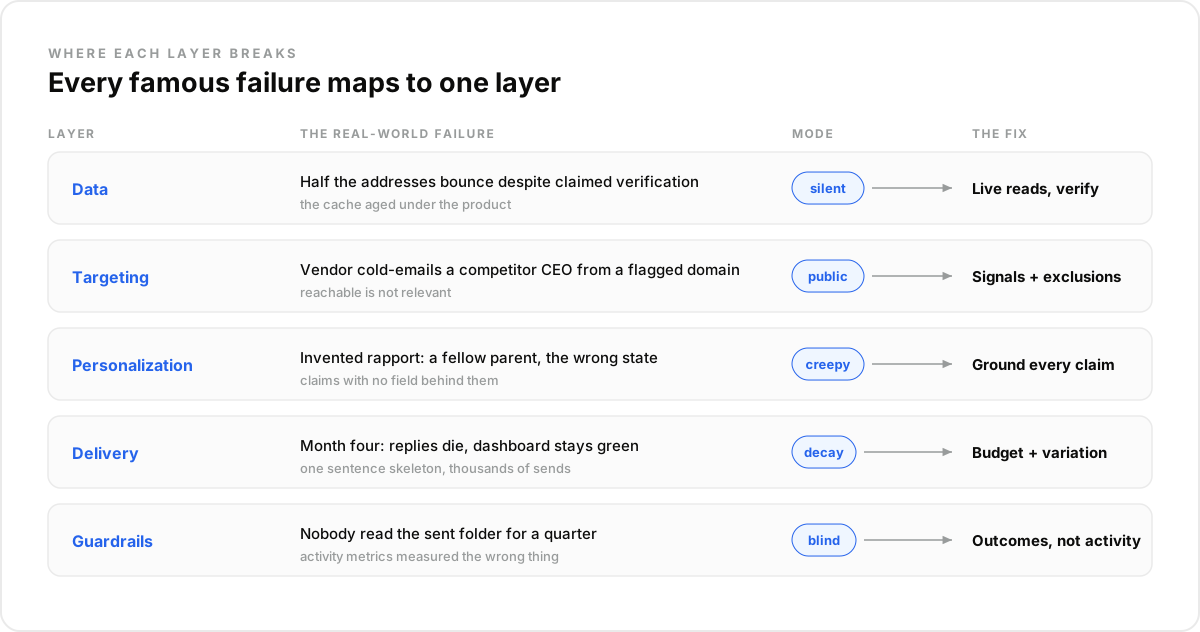
- Every famous AI SDR failure maps cleanly to one layer breaking while the others looked fine.
- The data layer sits under everything: stale records poison every layer above them.
- Build order matters: data first, guardrails second, generation last.
What Is AI SDR Architecture?#
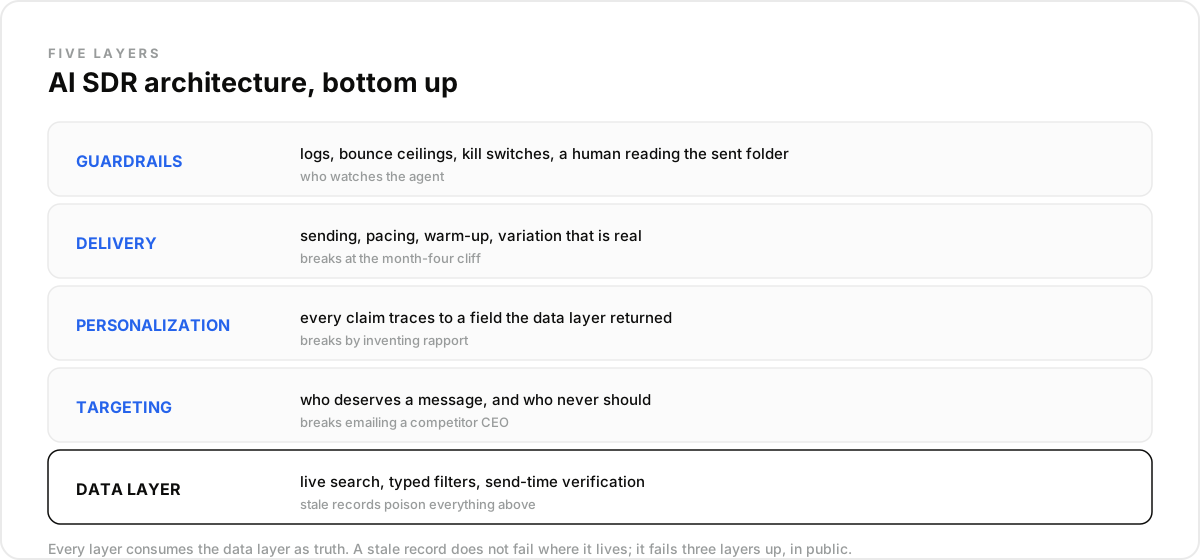
AI SDR architecture is the division of an outbound agent into layers with separate jobs: a data layer that knows the market, a targeting layer that picks who and why, a personalization layer that shapes the message, a delivery layer that sends it, and guardrails that watch the whole thing.
The reason to think in layers is diagnostic. When replies drop, "the AI is not working" is useless; "the delivery layer is decaying" is fixable. Layers turn a mystery into a checklist.
What AI SDR Architecture Is NOT#
It is not a model choice, not a tool list, and not a diagram of prompts. Teams conflate all three, and each confusion hides the layer that is actually failing. The architecture is the contract between layers; everything else is an implementation detail that can be swapped.
Not the model. Every vendor calls a frontier model. Swapping one for another moves quality single digits; fixing a stale data layer moves it multiples.
Not the sequencer. Instantly or Smartlead are one component of the delivery layer, not the system. Buying a sender does not buy targeting or data.
Not a prompt library. Prompts shape the personalization layer only. No prompt fixes a bounce or a bad list.
Why Does the Data Layer Sit Under Everything?#
Because every layer above it consumes its output as truth. Targeting filters records the data layer supplied. Personalization cites fields the data layer claimed. Delivery sends to addresses the data layer vouched for. A stale record does not fail in the data layer; it fails three layers later, in public.
The reference failure is the bounce autopsy: teams reviewing popular tools report half their addresses bouncing despite claimed verification. Nothing in targeting or copy was wrong. The cache under the product had aged, and the failure surfaced as a delivery problem two layers up.
The architectural rule that follows: the data layer must serve live reads, deep typed filters, and send-time verification. Search across 800M+ profiles, company records with funding and growth fields, enrichment that returns a verified work email per request. Everything above rents its accuracy from this floor.
Trace one healthy send through the stack and the dependency is obvious. A funding webhook names the account. Targeting pulls the VP of Sales through a people search. Personalization cites the round and the open roles. Delivery sends to an address verified minutes earlier. Guardrails log all four hops. Every single hop consumed the data layer, and none of them checked it.
Where Does Targeting Break?#
Targeting breaks when it optimizes reachability instead of relevance: everyone the system can email, rather than everyone with a reason to hear from you. The result is technically clean outreach to people who should never have been on the list at all.
The category's most public faceplant is the proof. A heavily funded AI SDR vendor cold-emailed the CEO of a direct competitor, from a domain the inbox provider had already flagged, opening with a quote from the CEO's own post about how outbound's hardest problem is knowing who deserves a message. The product refuted its own pitch in one send.
The fix is signal-driven targeting: the layer admits only entries carrying an observable trigger, an intent post, a hiring burst, a funding round, plus an exclusion list the agent checks before anyone enters the queue. Who to exclude is as architectural as who to include.
Where Do Personalization and Delivery Break?#
Personalization breaks by inventing what it does not know; delivery breaks by repeating what it does. The first produces fake intimacy, the second produces a detectable pattern, and the two compound: fabricated rapport at scale is exactly what inbox providers learn to filter.
The canonical story covers both. A GTM lead finally read the three hundred emails their agent had sent: condolence-adjacent cheerfulness to a prospect whose recent post was about losing his dog, invented common ground with a CFO, geography flattery from the wrong state. Meanwhile deliverability had quietly cratered, because thousands of sends shared one sentence skeleton under different personalization hats.
Architecturally the lessons split. Personalization must be grounded: every claim in a message traces to a field or a signal the data layer actually returned, and what cannot be grounded is not said. Delivery must be budgeted: volume tied to signals, addresses verified at send, warm-up respected, and variation real.
Who Watches the Agent?#
The guardrail layer answers the question every failure story ends with: who reads the sent folder? An agent needs the same observability as any production system, logs per send, reply and bounce curves per segment, and a human sampling raw output on a schedule, not after a prospect complains.
The green-dashboard trap is the reason this layer exists. Activity metrics kept climbing for months while replies died, because nothing measured the thing that mattered. The GTM lead's advice after the autopsy became a small legend in the forums: go read your AI's sent folder, right now.
Guardrails also hold the kill switches: bounce-rate ceilings that pause a domain, reply-sentiment checks that flag a tone problem, exclusion rules that protect open deals. In our experience these get built after the first incident; the architecture argument is to build them before.
The Build Order That Survives Contact#
Build from the bottom: data, then guardrails, then targeting, then delivery, and personalization last. It is the reverse of the demo order, which is why so many builds are demos. The generation layer is the easiest to add and the least decisive; the data layer is the opposite.
A one-integration data layer keeps the early stack small. DataForB2B ships the search, enrichment, posts, and signal feeds an SDR stack draws on behind one key, over REST for the pipeline and MCP when the agent should drive; the embedded B2B data API page shows the wiring. Full build steps live in our guide to building a signal-driven AI SDR.
What surprised us watching teams rebuild after failures is how rarely the second architecture keeps the original generation layer, and how it always keeps a stronger data layer. The rebuilds vote with their stack.
How Do You Stand Up the Data Layer in Claude or Any LLM Agent?#
The bottom layer is the only one you can stand up in an afternoon, and Claude is the fastest harness for it. Connect the data tools over MCP and run the layer's acceptance test as a plain-language brief.
- Create a free account at app.dataforb2b.ai/signup and grab your API key.
- In Claude, open Settings, then Connectors, and add https://mcp.dataforb2b.ai/mcp. The same server plugs into Cursor, VS Code, ChatGPT, or any MCP-enabled agent.
- Paste the brief: "Pick 10 target accounts, pull the decision-makers, verify their emails live, and report which records changed in the last quarter."
- Turn the working chat into a scheduled routine so it runs weekly without you.
Architecture is what you find out you needed the day the dashboard stayed green. Put the data layer in first, on the pricing page.
Frequently asked questions
- What are the layers of an AI SDR system?
- Five: a data layer for market truth, targeting for who and why now, personalization for shaping the message, delivery for sending and pacing, and guardrails for observability and kill switches. Most production incidents map to exactly one layer failing while its neighbors look healthy.
- Which layer should stay human?
- The one prospects read. Practitioners keep converging on the same split: agents run data, targeting, and research at machine speed, while a human writes or approves the message at signal-sized volume. Judgment about tone and taste is the layer automation degrades fastest.
- Should you build one agent or several?
- Start with one loop and clean layer contracts. Splitting into specialist agents helps once volume or channels multiply, but a multi-agent version of a broken architecture just distributes the breakage. The layer boundaries matter more than the number of agents running them.
- Where does the data layer sit in the stack?
- At the bottom, feeding every other layer: targeting filters its records, personalization cites its fields, delivery trusts its addresses. That position is why data problems masquerade as copy or deliverability problems. When any layer misbehaves, audit the record it consumed first.
- How do you monitor an AI SDR in production?
- Track outcomes, not activity: bounce rate per segment, reply rate per signal type, sentiment of replies, and spot-read raw sends weekly. Alert on decay curves, a slow reply decline is the classic silent failure, and keep a kill switch per domain. Dashboards lie; sent folders do not.