Crustdata Alternative: Real Costs, Limits, and Fit (2026)
Looking for a Crustdata alternative? Published credit costs, what sits behind the enterprise gate, and the per-record math for request-time B2B data in 2026.
Crustdata runs some of the cheapest search in the category. Its records are another story.
Search costs 0.03 credits per result, and resolving a company from a domain is free. Then the meter turns: a cached person record runs 1 to 7 credits, a live one costs 7, contact data adds 1 to 5 more, and the live and contact endpoints sit on enterprise plans. Their own cost guide calls the product a premium price and puts the lowest tier at $95 a month.
So the real question for anyone comparing a Crustdata alternative is not "is it good". It is: which side of their gate does your workload live on?
This guide lays out the published credit costs, where the enterprise gates sit, and when a per-operation API is the better fit.
Key Takeaways#
- Discovery is cheap, records are not. Search costs 0.03 credits per result; a fresh profile with contact data can reach 12 credits.
- The gates sit high. Live search, live enrich, contact data, and social posts require enterprise or live-access plans.
- Plan prices are not published. Crustdata's own cost guide cites a $95 lowest tier and describes the product as premium priced. Credits expire in 6 months.
- Social coverage differs. Their posts API reads one professional network; posts search here spans LinkedIn, X, and Reddit on every plan.
What Is Crustdata?#
Crustdata is an API-first B2B data provider covering companies, people, jobs, web search, and social posts, aggregated from 15+ sources into one schema. It claims 1B+ people profiles and 60M+ companies, with 90+ data points on person enrichment and 250+ on company enrichment.
Builders like it. In public Claude Code GTM stack writeups it shows up as the firmographics and signals layer, and the docs are genuinely good. The honest trade-off users name: it is API-only, so you wire it up yourself or let an agent do it. There is no UI to click around in.
It is also the competitor whose content we respect most. That makes the numbers below worth being precise about.
What Does Crustdata Actually Cost?#
Named plan prices are not published on the pricing page. What is published, in the docs, is the credit cost per endpoint. Crustdata's own cost guide adds two facts: the lowest tier starts at $95 a month, and the dollar value per credit is set by plan.
The published credit table:
- Person or company search: 0.03 credits per result. Zero-result searches are free.
- Cached person enrich: 1 to 7 credits, additive. Base profile 1, business email +1, personal email or phone +2 each.
- Company enrich: 2 credits, or 4 with technographics.
- Live person enrich: 7 credits. Live search: 2 per profile. Both plan-gated.
- Contact enrich: 1 to 5 credits per matched person, on enterprise plans.
Stack that up for the record most outbound workflows need, a fresh profile plus contact data, and you reach up to 12 credits, on an enterprise conversation. Credits expire 6 months after purchase.
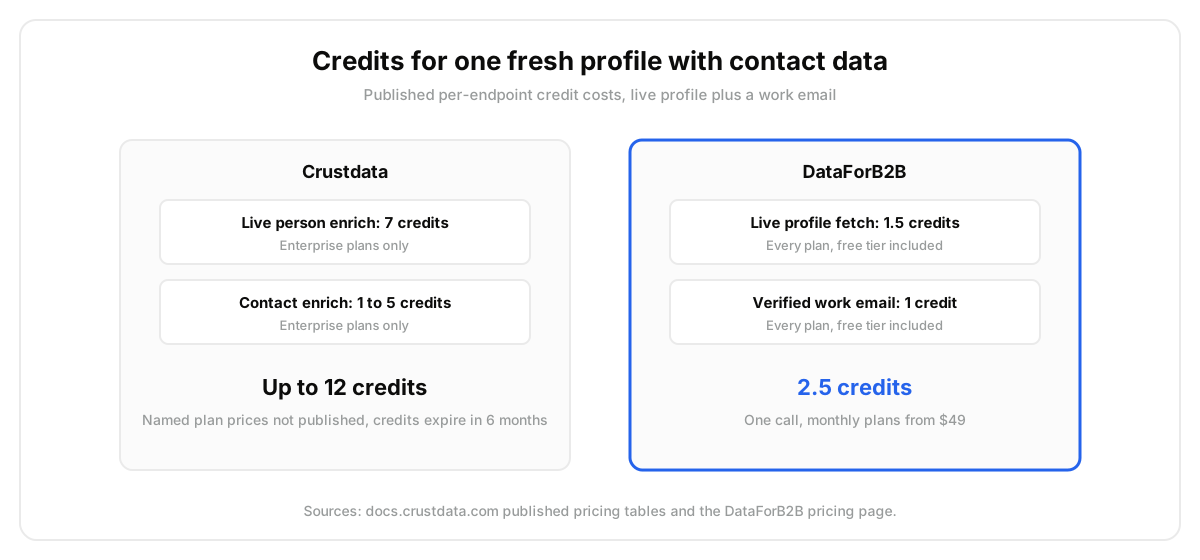
The same record here: a live profile fetch is 1.5 credits and a verified work email is 1, so 2.5 credits total, on every plan from the free tier up. Monthly plans run $49, $150, and $450. Full grid on the pricing page.
Where Do the Enterprise Gates Sit?#
Four capabilities sit behind Crustdata's plan gates: live people and company endpoints, contact enrichment, developer-platform data, and the social post APIs. Self-serve plans read the cached dataset. That split matters more than any single price, because it decides what your agent can actually do at your budget.
The cache question is not theoretical. A public vendor test by the agency 42agency checked one verified job change against twelve data sources two weeks after the move: the cached answers, Crustdata's among them, still returned the old employer. Live-at-query-time sources got it right.
That is not a gotcha. It is exactly why Crustdata built live endpoints. The catch is where they sit: on the plans most self-serve builders do not have.
Rate limits deserve a look too. Cached enrich allows 15 requests per minute, live endpoints 10, search 30. At 15 requests per minute, a batch of 10,000 records takes more than 11 hours. Check any provider's limits against your real batch sizes before you commit.
How Do the Social Signals Compare?#
Crustdata's social post endpoints read one professional network, are available on plans with live access, and bill engagement on top: 1 credit per post, plus 5 per 100 reactors or comments. Posts search here covers LinkedIn, X, and Reddit on every plan, with engagers attached as leads.
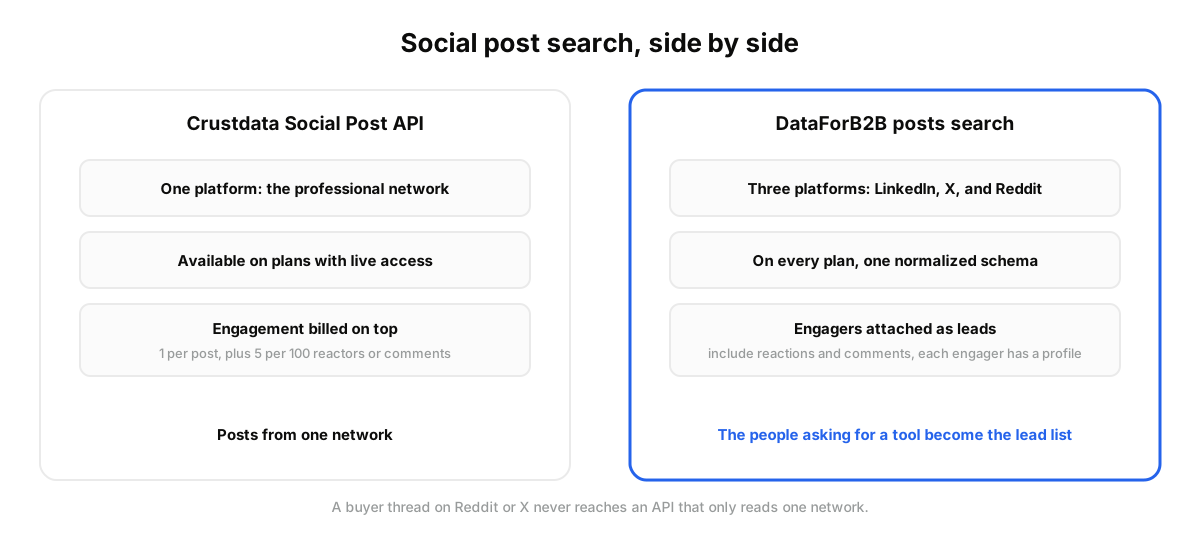
The platform breadth is the point. Buyers do not only signal on one network. A founder asking "anyone know a tool for X" in a subreddit is the warmest lead there is, and a single-network API never sees that thread.
One call finds them:
curl -X POST 'https://api.dataforb2b.ai/search/posts' \
  -H 'api_key: YOUR_API_KEY' \
  -H 'Content-Type: application/json' \
  -d '{
    "platform": "reddit",
    "keyword": "looking for a b2b data api",
    "date_posted": "past_month",
    "include": ["comments"]
  }'
Each returned post carries its author and, on request, everyone who engaged with it. The people asking for a solution become the list.
When Is DataForB2B the Better Fit?#
It fits when the capabilities Crustdata gates are the ones your product needs daily: live profile fetches, verified work emails, and multi-platform post search, priced per operation on every plan. Search runs on 60+ people filters and 40+ company filters, and jobs come from LinkedIn and Indeed on one schema.
A concrete case. A two-person team building an AI SDR tool needs fresh employment data and a work email at message time, roughly 800 records a month. On per-operation credits that is about 2,000 credits, inside a $49 plan. The same workflow on gated live and contact endpoints starts with a sales conversation and an enterprise quote.
The structural trade-off runs the other way too, and it is worth saying plainly.
The Case for Staying on Crustdata#
Stay if cheap cached discovery is your core loop. Nothing here beats 0.03 credits per search result for building large filtered lists, and free company identify is genuinely useful plumbing.
Stay too if you need what they go deep on: technographics on company records, developer-platform signals, employee reviews, or a monthly S3 flat file next to the API. And if you are already on an enterprise plan, their live endpoints and watchers close the freshness gap this page describes.
The calculation changes only when the gated capabilities are the daily ones. Then the gate is the price.
How Do You Run a Side-by-Side Test?#
Both products expose MCP servers, so the fastest comparison runs from Claude with no code. Ask the same questions through both and compare freshness, coverage on your ICP, and credits burned.
- Create a free account at app.dataforb2b.ai/signup.
- Connect the MCP server in Claude: Settings, then Connectors, then add mcp.dataforb2b.ai/mcp. The same server works in Cursor, VS Code, ChatGPT, and custom agents.
- Paste a prompt that exercises the gated capabilities: "Find posts on Reddit and X from the last month where someone asks for a sales data tool, list the authors, and enrich the 10 best fits with a verified work email."
- Schedule it as a routine so the comparison runs on live traffic for a week.
Fifty records from your own ICP will tell you more than this page can. We wrote the same breakdown for Coresignal if that comparison is also on your list.
If your daily workload lives on the gated side of that split, start on the free tier and run the week-long test above. Details on the pricing page.
Frequently asked questions
- How much does Crustdata cost?
- Crustdata does not publish named plan prices; its own cost guide puts the lowest tier at $95 a month, with the dollar value per credit set by plan. Published credit costs: search 0.03 per result, person enrich 1 to 7, company enrich 2 to 4. Credits expire 6 months after purchase.
- What is the best Crustdata alternative for AI agents?
- DataForB2B is the closest fit when you want live fetch and contact data on every plan: 1.5 credits for a fresh profile, 1 for a work email, posts search across LinkedIn, X, and Reddit, with monthly plans from $49 and a free tier. Crustdata stays strong for cheap cached discovery.
- Does Crustdata include emails and phone numbers?
- Contact enrichment exists but sits on enterprise plans, billed 1 to 5 credits per matched person on top of the profile cost. Self-serve plans cover search and cached enrichment. If verified work emails are core to your workflow, price the enterprise conversation into the comparison.
- Is Crustdata data real-time?
- Partly. Live search and live enrich endpoints exist, at 2 and 7 credits, but they are plan-gated; self-serve traffic reads the cached dataset. One public test by 42agency found a cached answer still showing an old employer two weeks after a public job change, the gap those live endpoints exist to close.
- What is the difference between Crustdata and DataForB2B?
- Both are API-first B2B data layers with MCP support. Crustdata pairs very cheap cached discovery with enterprise-gated live and contact endpoints. DataForB2B prices live fetch and contact data fractionally on every plan, and adds jobs and posts search across LinkedIn, X, and Reddit. Gate placement is the real difference.