How to Connect Claude to Funding Data (2026)
How to connect Claude to funding data: query funding stage and amount live, then catch a new round with a webhook monitor before the press release goes out.
A Series A closes on a Tuesday. The press release goes out Thursday. By Friday, six other vendors have already emailed the new VP of Sales.
That three-day gap is where deals get won or lost. Funding news is public the moment it is filed, long before a journalist writes it up. An agent that only reads TechCrunch is always late.
This guide covers what it actually takes to connect Claude to funding data: what "connected" means technically, what you can query once it is wired in, and how to catch a round before the announcement instead of after.
Key Takeaways#
- Funding data connects to Claude the same way any other B2B data does: through an MCP server exposed as native tools, not a plugin or a scraped feed.
- A funding filter on its own is a list. Paired with a monitor, it becomes an alert that fires the moment a round is recorded.
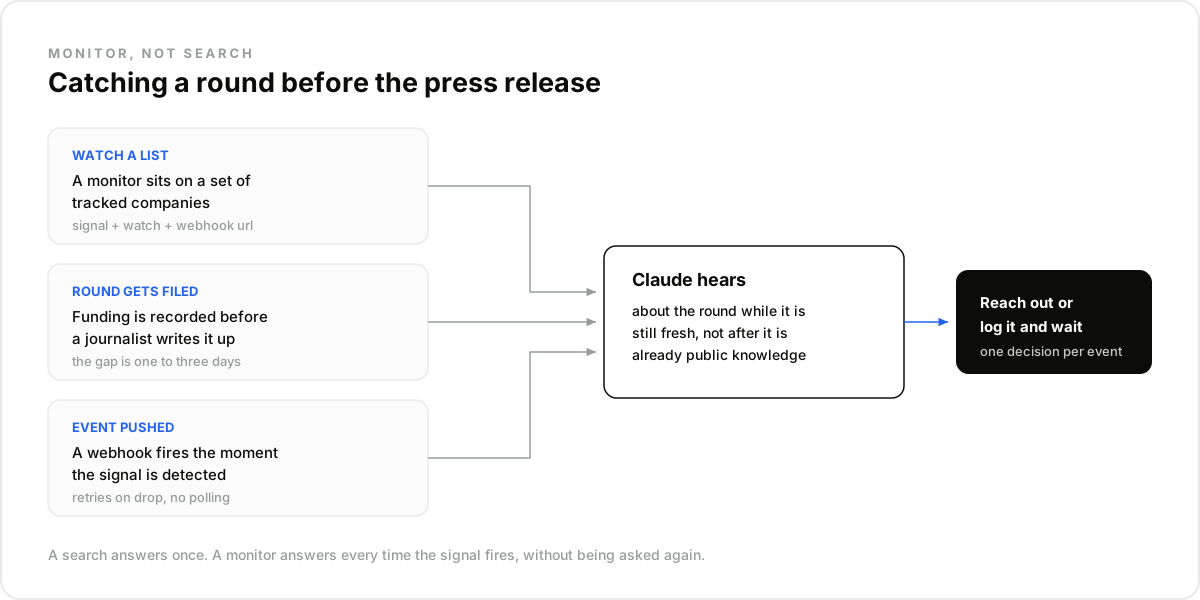
- The gap between a filing and a press release is usually one to three days. That gap is the whole opportunity.
What Does It Mean to Connect Claude to Funding Data?#
Connecting Claude to funding data means giving it a live tool call into a company database filtered on funding stage, amount, and date, instead of relying on what the model already knows. The model's training data has a cutoff. A live API does not.
In practice this is an MCP server. Claude calls it the same way it calls a calculator or a file reader. The difference is what comes back: a real company record, not a memory.
Without the connection, ask Claude "which Series A companies raised this week" and it will guess, or refuse. With it, the question becomes a query against a database that updates daily.
Why Funding Signals Beat a Manual Crunchbase Search#
A manual search answers one question at a time. A connected agent answers the same question every morning without being asked twice, and can chain the result into the next step.
One builder we spoke with described their old process: open Crunchbase, filter by stage, copy fifteen company names into a spreadsheet, then look up each founder by hand. Forty minutes, once a week, always a few days stale by the time outreach went out.
The mistake most teams make is treating funding data as a research task. It is a filter condition. Once it lives inside an agent's tool call, the research step disappears. What is left is the decision: reach out, or wait.
How Do You Set Up the Connection in Claude?#
Setup takes three steps: create an account, add the MCP server as a connector, and describe the query in plain language. No SDK, no auth flow beyond an API key.
- Create a free DataForB2B account and grab an API key from the pricing page.
- In Claude, open Settings, then Connectors, and add the MCP endpoint. The same server works in Cursor, VS Code, ChatGPT, or any MCP-compatible agent.
- Ask directly: "Find companies that raised a Series A or Series B in the last 30 days, headquartered in the US."
Nothing about that setup is specific to funding data. The same connector exposes people, companies, jobs, and social posts. Funding is one filter family among several, which matters once the agent's job grows past a single use case.
That last step is the whole point. The filter logic lives behind the tool. Claude translates the sentence into a structured query and returns records, not a search results page.
What Can Claude Actually Query Once It's Connected?#
Once connected, Claude can filter companies on funding stage, last funding amount, last funding date, and whether a company has any funding on record at all, then combine that with size, industry, and headquarters in a single request.
curl -X POST https://api.dataforb2b.ai/search/companies \
  -H "api_key: YOUR_api_key" \
  -H "Content-Type: application/json" \
  -d '{
        "filters": {
          "op": "and",
          "conditions": [
            { "column": "funding_stage_normalized", "type": "in", "value": ["series_a", "series_b"] },
            { "column": "last_funding_date", "type": ">=", "value": "2026-07-08" },
            { "column": "country_iso_code", "type": "=", "value": "US" }
          ]
        }
      }'
The funding stage enum covers everything from pre_seed_round through post_ipo stages, so the same query works whether the target is a two-person seed startup or a company raising a late private round. Claude picks the right value from the sentence; you never write the filter by hand.
How Do You Catch a Round Before It's Announced?#
You catch it by watching instead of searching. A monitor sits on a signal and pushes an event to a webhook the moment it fires, so the agent hears about the round instead of polling for it.
One outbound practitioner who writes about trigger-based prospecting put it plainly: funding alone is a race, since every vendor in the category emails within 48 hours of the announcement. Funding paired with a hiring spike, a new leader, or a new product signal is a sharper trigger, specific enough that a team can afford to wait a few weeks and still not be lost in the pile.
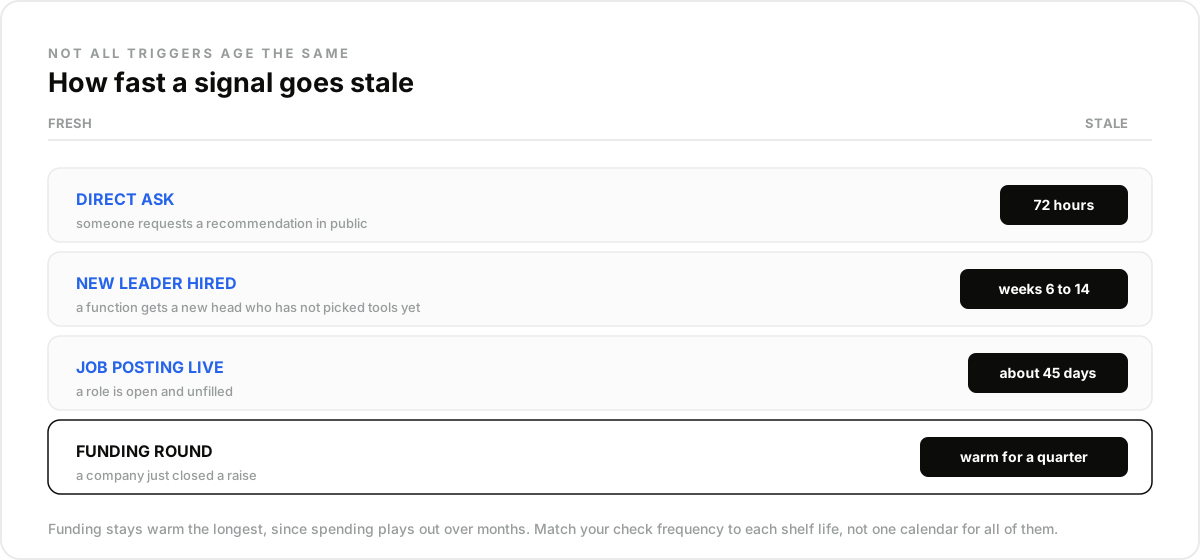
The same research broke down how fast different triggers go stale. A funding round stays warm for a while, since the spending plays out over quarters. A new hire decays faster. Bucketing outreach by days-since-trigger, instead of treating every lead the same age, is what separates a monitor that earns its cost from one that just adds noise to a list.
The mechanism is a webhook that fires when a tracked event occurs on a watched company or list, delivered with retries so a dropped connection does not mean a missed signal. The agent's job shrinks to one decision per event: act now, or log it and move on.
What Funding Data Is Not#
Funding data is not a substitute for firmographic data, and it is not the same as a news feed.
Not firmographics. Funding tells you a company raised money. It does not tell you headcount, industry, or where the offices are. Those come from a separate set of columns, queried together but sourced differently.
Not a press aggregator. A tool like Crunchbase's public feed surfaces what has already been written up. A live company database reflects what was filed, which is often earlier and less curated.
Not a replacement for a data provider's full dataset. Closed providers like Coresignal or People Data Labs hold deep historical funding archives well suited to research. The difference here is access pattern: those are queried in batch, this is queried live, inside the same tool call an agent already makes for everything else.
Funding Data by Vertical: Sales, Recruiting, and Investment#
The same funding filter means something different depending on who is asking.
Sales tooling / AI SDR. A newly funded company is a budget signal. An outbound agent filters on recent funding plus company size, then finds the decision maker before the team scales past a cold-outreach-friendly size.
Recruitment tooling. A funded company is often a hiring signal in disguise. A sourcing agent cross-references funding events with job postings to catch a team about to scale, before the listings go live.
Investment / VC tech. This is the sharpest use case. A deal-sourcing agent watches funding events at portfolio-adjacent companies and screens for stealth founders, the ones directories miss because they have not filed a round yet, only formed the entity. Pair that with an investor filter and the same query answers a sharper question: which companies just took money from a fund this agent tracks closely.
How Do You Run This Workflow in Claude?#
You run it by turning the query into a saved routine, so the check happens daily without you opening a terminal or a dashboard.
- Create a free account at app.dataforb2b.ai/signup and grab your API key.
- In Claude, open Settings, then Connectors, and add the MCP server. It works the same way in Cursor, VS Code, ChatGPT, or any other MCP-compatible agent.
- Paste a working prompt: "Watch for Series A and Series B rounds at US-based companies under 200 employees. When one fires, pull the founder's profile and draft a two-line outreach note."
- Turn the conversation into a scheduled routine so it checks every morning without a manual re-run.
See how the data layer fits an agent that needs this daily. Start on the free tier from the pricing page, or read how funding signals work as a category before wiring in Claude specifically.
Frequently asked questions
- Can Claude access real-time funding data?
- Yes, through an MCP connector to a live company database, not through its training data. The model calls a tool at request time and gets a current record back, so the answer reflects today, not the training cutoff.
- How is a funding monitor different from a funding alert email?
- An alert email is read by a human on their own schedule. A monitor pushes a webhook event the moment the signal fires, so an agent can act within minutes instead of whenever an inbox gets checked.
- What triggers a funding signal?
- A recorded change in a company's funding data, such as a new round being logged with a stage, amount, and date. The exact detection mechanism sits behind the monitor; the builder only defines what to watch and where to send the event.
- Can this replace a manual Crunchbase search?
- For the "who raised recently" question, yes. For deep historical research on one company's full funding history, a dedicated archive still has more depth. The two are complementary, not interchangeable.
- Does the signal fire before the funding is publicly announced?
- Often, yes. Funding events are typically filed before a press cycle picks them up, which is why teams that watch the data instead of the news get the one-to-three-day head start.