How to Connect Claude to Intent Data (2026)
How to connect Claude to intent data: search Reddit, Twitter, and LinkedIn for people directly asking for a solution, the strongest buying signal there is.
Somewhere on Reddit right now, someone is typing "anyone know a good tool for X?" That sentence is worth more than a thousand cold-email opens. The person asking is not a suspect. They are actively looking, today.
Most intent data products infer interest from indirect signals: a visitor on a pricing page, a spike in searches for a category. Direct intent skips the inference. Someone said, in public, that they want a solution.
This guide covers connecting Claude to that kind of intent data: what actually counts as a signal, how to tell a real buying question from noise, and the difference between someone engaging with content and someone actively asking for help.
Key Takeaways#
- The strongest intent signal is not engagement with a post. It is someone directly asking for a recommendation, in public, right now.
- Connected through Claude, intent search runs across LinkedIn, Twitter, and Reddit with the same query shape, so one workflow covers all three.
- A high-intent post without enrichment is just an interesting read. The signal only becomes an action once the author is resolved to a reachable person.
What Is Intent Data, Exactly?#
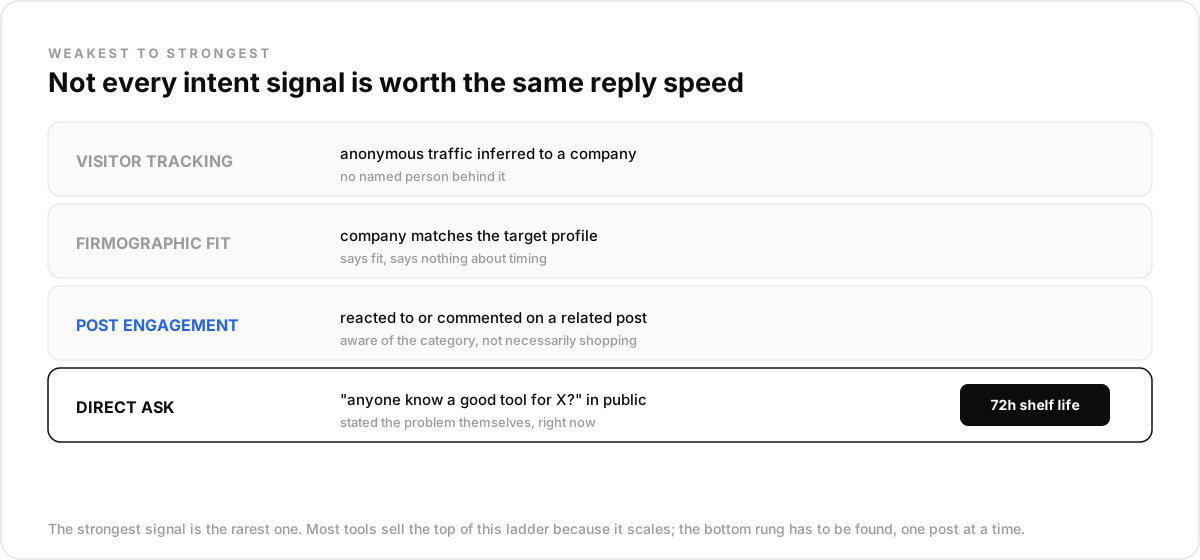
Intent data is a signal that someone is actively evaluating or looking for a solution in a category, as opposed to firmographic data, which just says a company fits a target profile regardless of what anyone there wants right now.
There are two flavors. Indirect intent infers interest from behavior: a visit, a download, a search trend. Direct intent is someone stating the need outright, in a public post, before any vendor has reached out.
Direct intent is rarer and far more valuable. Indirect intent guesses at a maybe. Direct intent is a person saying, in their own words, that they have a problem right now.
Most vendors sell the indirect kind because it scales easily: pixel a lot of sites, model interest across thousands of anonymous sessions. Direct intent does not scale the same way. It has to be found, one real post at a time, which is exactly the kind of search a connected agent is suited for.
Can Claude Read Reddit and Twitter for Buying Signals?#
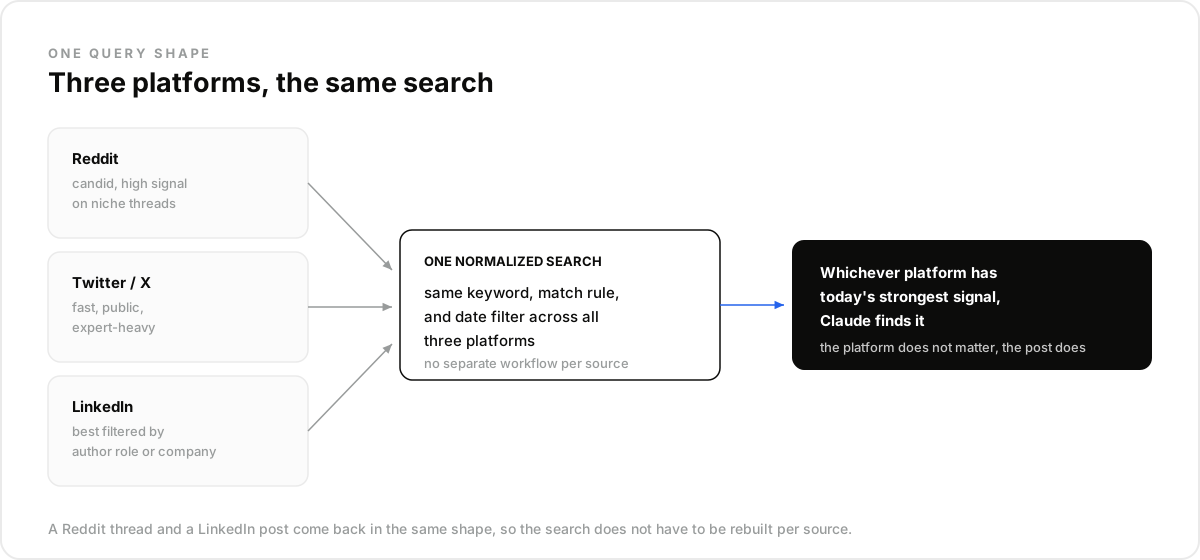
Yes, through an MCP connector that queries social posts across LinkedIn, Twitter, and Reddit by keyword, with the same request shape regardless of platform, so switching where the signal lives does not mean rebuilding the workflow.
The search runs on a normalized schema. A Reddit thread and a LinkedIn post come back in the same shape, which matters because the strongest intent signal on a given day might live on either one.
Builders have started asking the inverse question in public too: whether a general-purpose agent, not a dedicated sales tool, can find these posts at all. It can, once it has a live connector into the right search surface.
That question matters because it flips the usual build order. Most teams start with a dedicated sales tool and wonder later if an agent can replace parts of it. Here, the agent is the starting point, and the search capability is just one more tool it calls.
What's the Strongest Kind of Intent Signal?#
curl -X POST https://api.dataforb2b.ai/search/posts \
  -H "api_key: YOUR_api_key" \
  -H "Content-Type: application/json" \
  -d '{
        "platform": "reddit",
        "keyword": "recommend a tool for cold outreach",
        "match": "strict",
        "date_posted": "past_week",
        "sort_by": "relevance"
      }'
That query looks for people asking directly, not people mentioning the topic in passing. The author of a post like that is the lead. Not the people who liked it, the person who wrote it.
One practitioner who catalogs cold-outreach triggers for a living ranked this the strongest signal on the whole list, ahead of funding, ahead of hiring, ahead of anything inferred. The logic: the person stated the problem themselves, unprompted, in writing, with no vendor involved yet. The same research put a number on how fast it fades, giving it roughly a 72-hour shelf life before the moment passes.
Is Engaging With a Post a Weaker Signal Than Asking for One?#
Yes, but it is not worthless. Engaging with a competitor's post still identifies someone paying attention to the category, just earlier in the decision than someone asking outright for a recommendation.
This is the other half of the same search capability: pull the people who reacted to or commented on a specific post, most often a competitor's announcement, and treat that list as warm rather than hot. Each engager comes back with a name, headline, and profile link, ready to pass into enrichment.
The mistake most teams make is treating every engager as equally warm. Someone who left a substantive comment is a stronger lead than someone who only reacted. Read the comment before deciding how fast to move.
Watching a competitor's launch post is the clearest version of this. Everyone who reacted saw the announcement and, at minimum, knows the category exists. That alone is worth more than a cold list with no context attached.
What Intent Data Is Not#
Intent data is not the same as tracking anonymous website visitors, and it is not a replacement for firmographic fit.
Not visitor tracking. Deanonymized website traffic infers a company from an IP address, with no named person and no direct statement of need. Social intent starts from a named author who said something specific, in public, on purpose.
Not a fit signal. A person asking for a tool might work at a company outside the target profile entirely. Intent tells you they want something; firmographic data still has to confirm they are a fit worth pursuing.
Not a replacement for a dedicated intent platform. Providers like Bombora aggregate intent at scale across a wide web of publisher content. This is narrower and more direct: posts people wrote themselves, on platforms an agent can query the same way it queries everything else.
Both approaches have a place. A wide intent platform is built for account-level scoring across a market. Social intent search is built for finding the one person who said something specific, today, worth a direct reply.
How Do the Three Verticals Use Intent Signals?#
Sales tooling / AI SDR. An outbound agent searches for people asking about a category weekly, enriches the author for a verified email, and reaches out same day, while the need is still top of mind.
Recruitment tooling. The same mechanism flips: watch for people posting that they are open to new roles or frustrated with a current one, a direct-intent signal for sourcing that beats waiting for someone to update a profile status.
Investment / VC tech. A deal-sourcing agent watches founder-adjacent communities for people describing a problem their own product might solve, an early signal of a company worth tracking before it raises a public round.
All three verticals run the identical search mechanic underneath. What changes is the keyword set and which platform gets weighted higher. Sales tends to lean on Twitter and LinkedIn; recruiting and early-stage deal sourcing often find more signal on Reddit, where people are candid in a way they rarely are on a professional network.
How Do You Run This Workflow in Claude?#
You run it as a recurring search plus enrichment pair, so new high-intent posts get surfaced and resolved without a person scrolling Reddit by hand every morning.
- Create a free DataForB2B account at app.dataforb2b.ai/signup and grab your API key.
- In Claude, open Settings, then Connectors, and add the MCP server. The same connector works in Cursor, VS Code, ChatGPT, or any MCP-compatible agent.
- Paste a working prompt: "Search Reddit and Twitter this week for people directly asking for a cold outreach tool, then enrich each author for a work email."
- Turn it into a scheduled routine so the search reruns daily and new posts surface without a manual check.
See how the same connector handles enrichment on the people enrichment API page, or start on the free tier from the pricing page.
Frequently asked questions
- What is B2B intent data, exactly?
- A signal that someone is actively evaluating a solution in a category, either inferred from behavior like page visits, or stated directly in a public post. The direct kind is rarer and generally the stronger lead.
- Can Claude read Reddit and Twitter for buying signals?
- Yes, through an MCP connector that searches posts by keyword across both platforms, plus LinkedIn, using the same normalized request whether the signal shows up in a subreddit thread or a tweet.
- How is this different from tracking website visitors?
- Visitor tracking infers a company from anonymous traffic, with no named person behind it. Social intent starts from a named author who wrote something specific in public, which is a stronger and more actionable starting point.
- Is asking for a solution a stronger signal than engaging with a post?
- Generally yes. Someone asking outright is actively shopping right now. Someone who reacted to or commented on a related post is aware of the category, but not necessarily ready to act yet.
- How fresh does intent data need to be to matter?
- Very. Practitioners who track this closely put the shelf life on a direct ask at around 72 hours. A person asking for a recommendation this week is a live opportunity. The same post from three months ago is likely already resolved with a different vendor.